

August 31, 2026
Study in New Zealand: Your Complete Guide to a World-Class Education in 2026
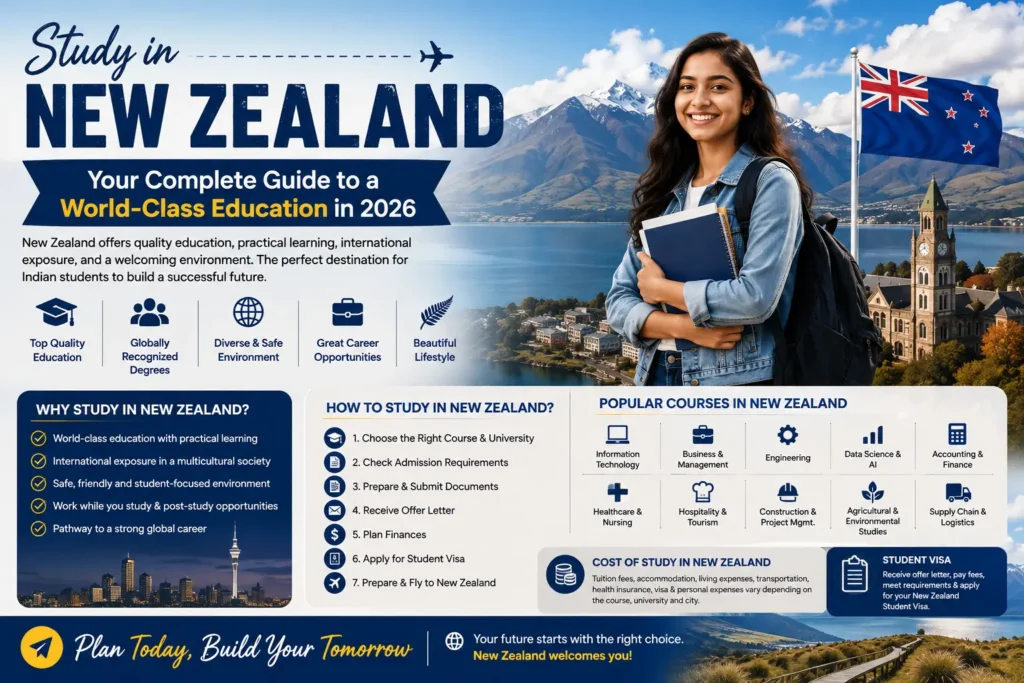
Choosing the right country for higher education is an important decision for every international student. Study in New Zealand is an attractive option for students looking for quality education, practical learning, international exposure, and a welcoming environment. New Zealand offers a modern education system with programmes across business, engineering, information technology, healthcare, hospitality, and many other fields.
For Indian students, planning to study abroad involves several important steps, including choosing the right course and university, understanding tuition fees, preparing documents, meeting admission requirements, and applying for a student visa. With the right information and professional guidance, students can plan their New Zealand education journey with greater confidence.
Why Study in New Zealand Is a Smart Choice for International Students

New Zealand has built a strong reputation as an international education destination. Its education system focuses not only on academic knowledge but also on independent thinking, practical skills, creativity, and problem-solving.
Students can experience a learning environment where classroom knowledge is often connected with real-world applications. This can help them develop communication, teamwork, research, and analytical skills that are useful in their future careers.
Another advantage is the range of programmes available to international students. Depending on their academic background and career goals, students can explore undergraduate, postgraduate, diploma, certificate, and other specialised programmes.
New Zealand also offers a multicultural environment where students can meet people from different countries and backgrounds. This international exposure can help students become more adaptable and confident.
Best Courses to Study in New Zealand for Indian Students
Choosing the right programme is one of the most important parts of your overseas education journey. The best course for you depends on your previous qualification, interests, career plans, budget, and long-term goals.
Some popular study areas include:
- Information Technology and Computer Science
- Business and Management
- Engineering
- Data Science and Artificial Intelligence
- Accounting and Finance
- Healthcare and Nursing
- Hospitality and Tourism
- Construction and Project Management
- Agricultural and Environmental Studies
- Supply Chain and Logistics
Students should look beyond the popularity of a course. Before applying, compare the curriculum, entry requirements, tuition fees, duration, location, and potential career relevance.
A course that matches your academic profile and career objective can provide a stronger foundation for your professional journey.
How to Study in New Zealand: Courses, Universities, Fees & Visa
Planning to study overseas involves several stages. Students should start their preparation early rather than waiting until the application deadline.
The first step is to identify the area you want to study. Once you have selected your preferred field, research universities and institutions that offer suitable programmes.
You should then compare:
- Course structure
- University and institution profile
- Academic entry requirements
- English-language requirements
- Tuition fees
- Available intakes
- Location
- Accommodation options
- Overall cost of living
After shortlisting suitable options, you can prepare your academic documents and submit your application according to the institution’s requirements.
Receiving an offer from an institution is an important milestone, but the process does not end there. Students must also plan their finances and prepare the required documentation for the visa stage.
How Much Does It Cost to Study in New Zealand?
The total cost of studying overseas depends on several factors, including your programme, institution, location, lifestyle, and duration of study.
Tuition fees can vary significantly between different courses and institutions. Therefore, students should check the latest fee structure directly with their selected institution before making financial commitments.
Apart from tuition fees, your overall budget may include:
- Accommodation
- Food and groceries
- Transportation
- Study materials
- Health and travel-related expenses
- Visa and application costs
- Personal expenses
- Emergency funds
Creating a realistic budget can help students and their families understand the financial commitment involved.
It is also important to consider the cost of living in the city where you plan to stay. Accommodation and daily expenses can differ depending on the location and your lifestyle.
Instead of calculating only the tuition fee, students should prepare a complete financial plan covering the entire study period.
New Zealand Student Visa: Requirements and Application Process
A student visa is an important part of your international education journey. After selecting an eligible programme and receiving the required admission documentation, students need to prepare their visa application according to the current immigration rules.
The process may involve:
- Selecting an appropriate course and institution.
- Checking academic and English-language requirements.
- Preparing educational documents.
- Applying to the selected institution.
- Receiving the necessary admission documentation.
- Organising financial evidence.
- Preparing the visa application.
- Submitting the required supporting documents.
- Completing any additional requirements requested by the relevant authorities.
- Preparing for travel after receiving visa approval.
Visa requirements can change over time, so students should always verify the latest official requirements before submitting an application.
Accuracy is especially important when preparing financial and personal documents. Any inconsistency or missing information can potentially delay the application process.
What Makes New Zealand Different for International Students?
One of the key attractions of New Zealand is its approach to education. Students are encouraged to develop independent thinking instead of simply memorising information.
Many programmes involve assignments, presentations, projects, research, practical activities, and discussions. These experiences can help students develop skills beyond their academic subjects.
International students can also benefit from exposure to a multicultural environment. Meeting classmates from different countries can improve communication skills and broaden a student’s understanding of different cultures.
Outside the classroom, New Zealand offers a unique lifestyle. Students can experience modern cities as well as mountains, beaches, lakes, and other natural landscapes.
However, students should consider both the advantages and responsibilities of living abroad. Being away from family requires independence, financial planning, time management, and adaptability.
Understanding these factors before travelling can help students prepare mentally and financially for their new environment.
How to Choose the Right University and Course
There is no single university or programme that is perfect for every student. The right choice depends on your academic profile and future plans.
Choosing the right New Zealand education pathway requires careful consideration of your academic background, career goals, budget, and preferred course.
Before finalising your decision, consider the following factors.
Academic background:
Check whether your previous qualification meets the programme’s entry requirements.
Career goals:
Think about what type of career you want to pursue and whether the programme supports that direction.
Course curriculum:
Review the subjects, practical components, projects, and learning outcomes instead of looking only at the course title.
Budget:
Consider both tuition fees and living expenses.
Location:
Think about accommodation, transportation, lifestyle, and accessibility.
Duration:
Understand how long the programme will take and plan your finances accordingly.
Entry requirements:
Check academic qualifications, English-language requirements, and any additional conditions before applying.
Taking time to compare these factors can help you avoid choosing a course simply because it is trending.
Documents Required for Your Study Abroad Application
Preparing your documents early can make the application process smoother. Preparing these documents in advance can make your New Zealand study application more organised and efficient. The exact requirements depend on the institution, programme, and individual applicant.
Common documents may include:
- Valid passport
- Academic certificates
- Mark sheets or transcripts
- English-language test results, where applicable
- Statement of Purpose, if required
- Resume or CV, where applicable
- Recommendation letters, if required
- Financial documents
- Admission-related documents
- Visa supporting documents
Students should ensure that all documents are accurate, clear, and consistent.
It is also a good idea to maintain digital copies of important documents so they can be accessed easily during different stages of the application.
Why Professional Guidance Can Make a Difference
Applying to study overseas can sometimes feel complicated because there are multiple stages involved. Students may need to research institutions, compare courses, understand eligibility criteria, prepare applications, organise documents, and plan their visa process.
Professional guidance can make this journey more organised. Experienced guidance can help students understand the different stages of their New Zealand education journey.
At SPM Consultancy Services, students can receive guidance based on their academic profile, preferred course, destination, budget, and future career goals.
The support can help students understand their available options rather than making a decision based only on advertisements, social media recommendations, or rankings.
From course and university selection to application and documentation guidance, having a structured approach can help students move through each stage with greater confidence.
The goal should not simply be to secure admission. It should be to choose an educational pathway that makes sense for the student’s academic and professional future.
Plan Your Future with Confidence
Choosing to study overseas is a major investment in your future. A well-planned study abroad journey in New Zealand can help students prepare for their academic and professional goals. The right destination and course can give you valuable academic knowledge, international exposure, practical skills, and personal growth.
However, successful planning starts before the application is submitted. Students should carefully research their course options, understand financial requirements, compare institutions, prepare documents, and learn about the visa process.
If New Zealand is one of your preferred study destinations, starting early can give you more time to make informed decisions and prepare a strong application.
With the right planning and professional support, your international education journey can become more structured and less stressful.
Ready to explore your options?
Connect with SPM Consultancy Services for personalised guidance on courses, universities, applications, documentation, and your journey towards studying in New Zealand.